
A photovoltaic power station is composed of many photovoltaic modules. The thickness of the galvanized layer of the photovoltaic support directly affects the power generation of the photovoltaic power station. What is the thickness of the galvanized layer of the photovoltaic support? What is the specific situation? Let's get to know.
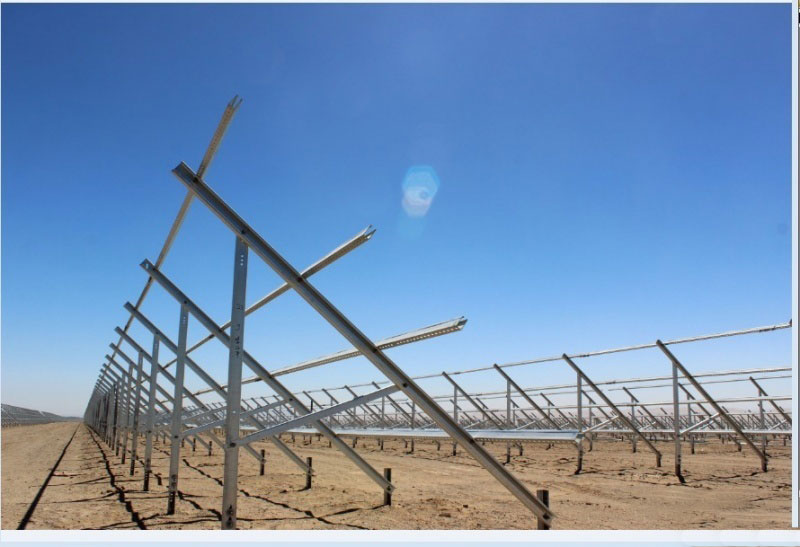
What is the zinc coating thickness of photovoltaic support?
We all know that the poor quality of photovoltaic support and the installation method directly affect the income of photovoltaic power station. In our life, the support materials used now are generally carbon steel and aluminum alloy. The materials of carbon steel are generally Q235 and Q345, which are hot-dip galvanized. The support is processed by cold bending, welding, hot galvanizing and other processes of strip steel coil. Generally, the thickness should be greater than 2mm, especially for some windy areas and areas such as seaside and high-rise buildings, it is recommended that the thickness should not be less than 2.5mm, otherwise the connection points of steel will be torn.
Today, Runhong solar will talk about how much zinc coating thickness is required for carbon steel photovoltaic supports to meet the requirements of environmental corrosion service life?
As we all know, the thickness of hot-dip galvanizing is an important quality and technical index of photovoltaic support, which is related to the safety and durability of structure. Although there are national and industrial specifications, it is still a common technical problem of the support that the thickness of the galvanized layer of the support does not meet the standard. Hot dip galvanizing process is a relatively stable and reliable steel surface treatment scheme to resist environmental corrosion. There are many factors affecting hot dip galvanizing, such as steel substrate composition, surface state (such as roughness), substrate internal stress, geometric size, etc. among them, the thickness of substrate has a great impact on the thickness of hot dip galvanizing, and generally the thicker the plate is, the greater the thickness of hot dip galvanizing. Next, Runhong solar takes the support with a thickness of 2.0mm as an example to illustrate how much zinc coating thickness is required to meet the service life requirements of environmental corrosion.
Assuming that the thickness of the stent substrate is 2mm, it can be known according to the specification GBT13192-2002 hot-dip galvanizing specification.
What is the thickness of the galvanized layer of the photovoltaic support to meet the service life requirement?
According to the requirements of the national standard, for a 2mm substrate, the local thickness should not be less than 45μm, and the average thickness should not be less than 55μm. According to the results of the atmospheric exposure test conducted by the Japan Hot-Dip Galvanizing Association from 1964 to 1974.
What is the thickness of the galvanized layer of the photovoltaic support to meet the service life requirement?
If calculated according to the national standard, the average thickness is 55μm, and the zinc content is 55x7.2=396g/m2. The usable life under four different environments is about:
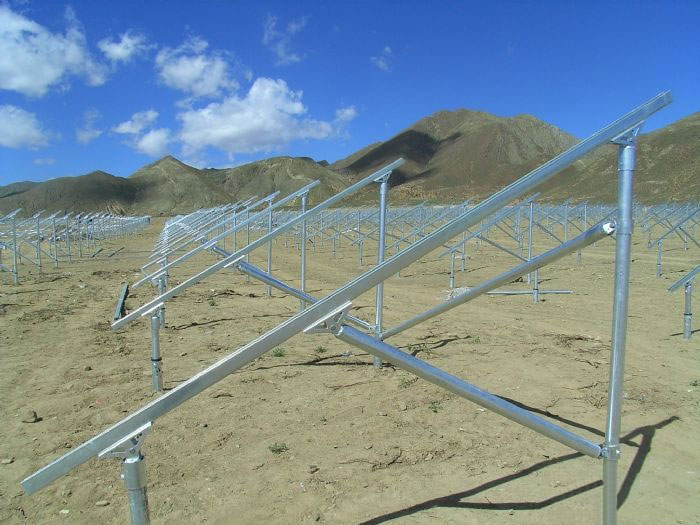
What is the thickness of the galvanized layer of the photovoltaic support?
Heavy industry zone: 8.91 years, with an annual corrosion rate of 40.1;
Coastal zone: 32.67 years, the annual corrosion degree is 10.8;
Suburban area: 66.33 years, with annual corrosion degree of 5.4;
Urban area: 20.79 years, with annual corrosion degree of 17.5;
If the PV service life is 25 years, the four zones are at least 1002.5270135437.5, i.e. 139 μ m,37.5 μ m,18.75 μ m,60.76 μ m。 Therefore, for the distribution of urban areas, the thickness of zinc coating shall be at least 65 μ M is reasonable and necessary, but for heavy industrial zones, especially those with acid-base corrosion, it is recommended that the thickness of support and galvanized layer should be increased appropriately.
All aluminum profiles of photovoltaic supports are made of al6005, processed in T5 state, and the surface is anodized 12-15mic; All stainless steel materials are 304 brand; Q235 steel is adopted, and the surface treatment is hot-dip galvanizing, with an average of 80mic.
The excellent hot-dip galvanized material provides the support with long-lasting durability and more than 30 years of service life. Make the minimum wind load of ChenKe support products reach 42m / s and snow load: 1.4kn/m2.